Original: $821.50
-65%$821.50
$287.52The Story
Description
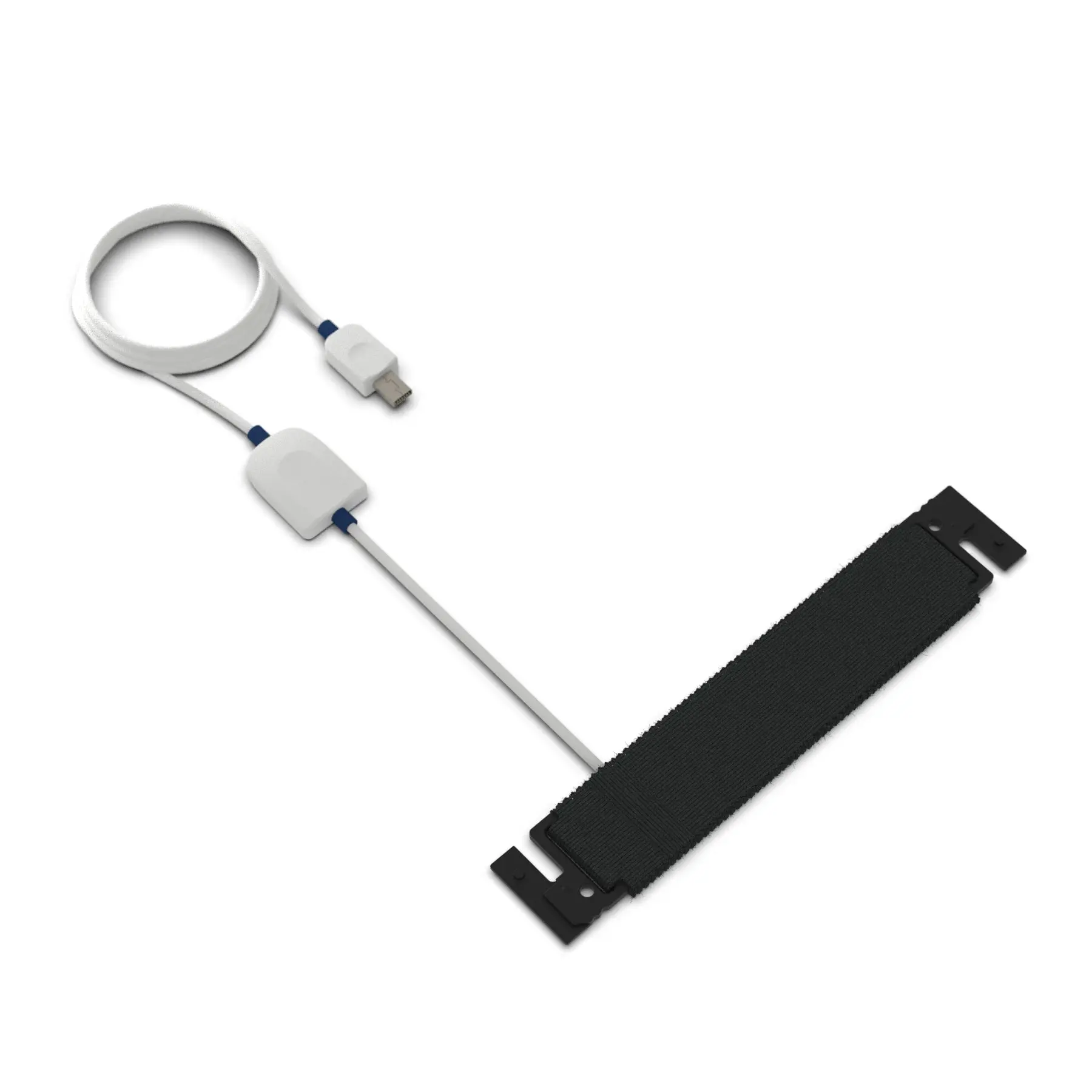
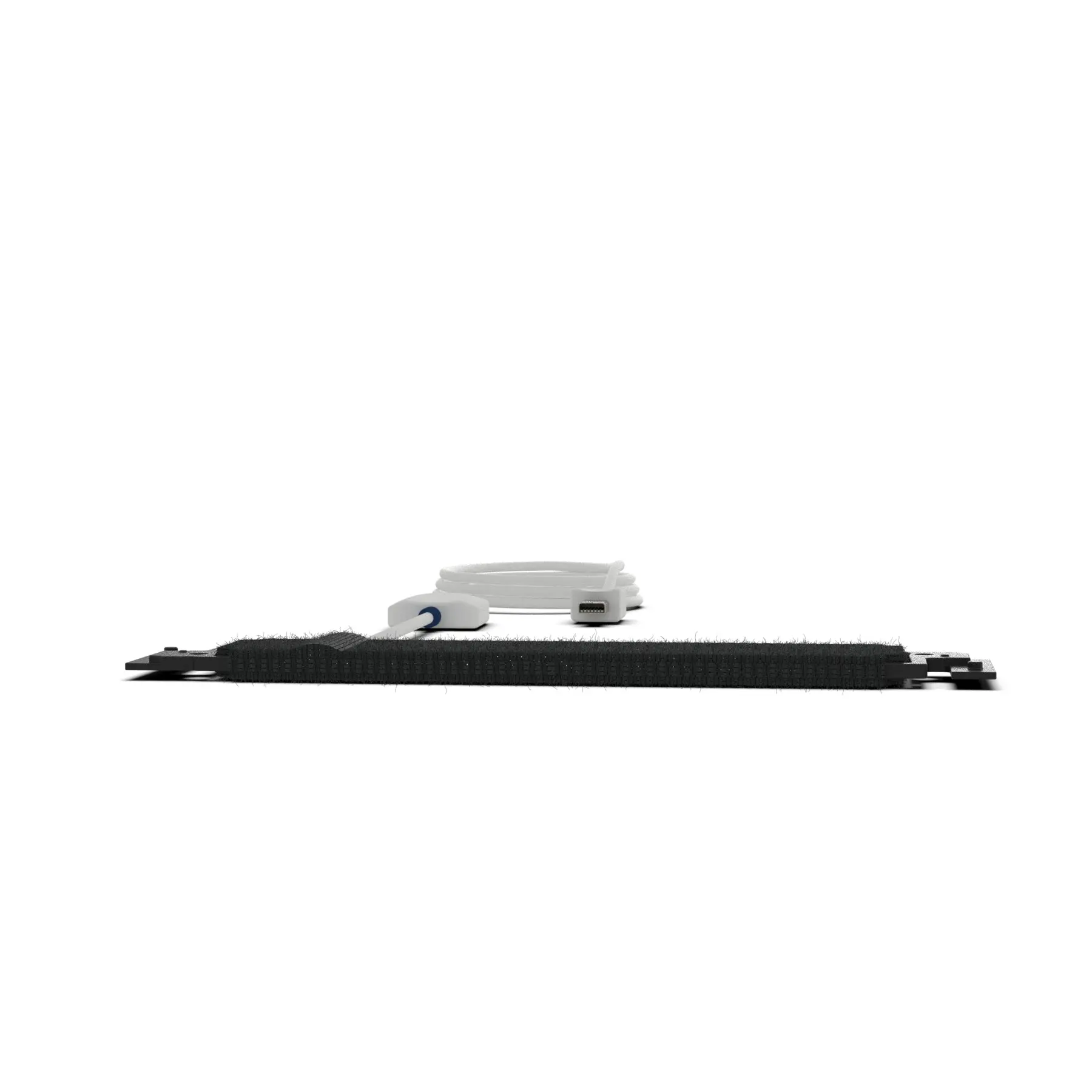
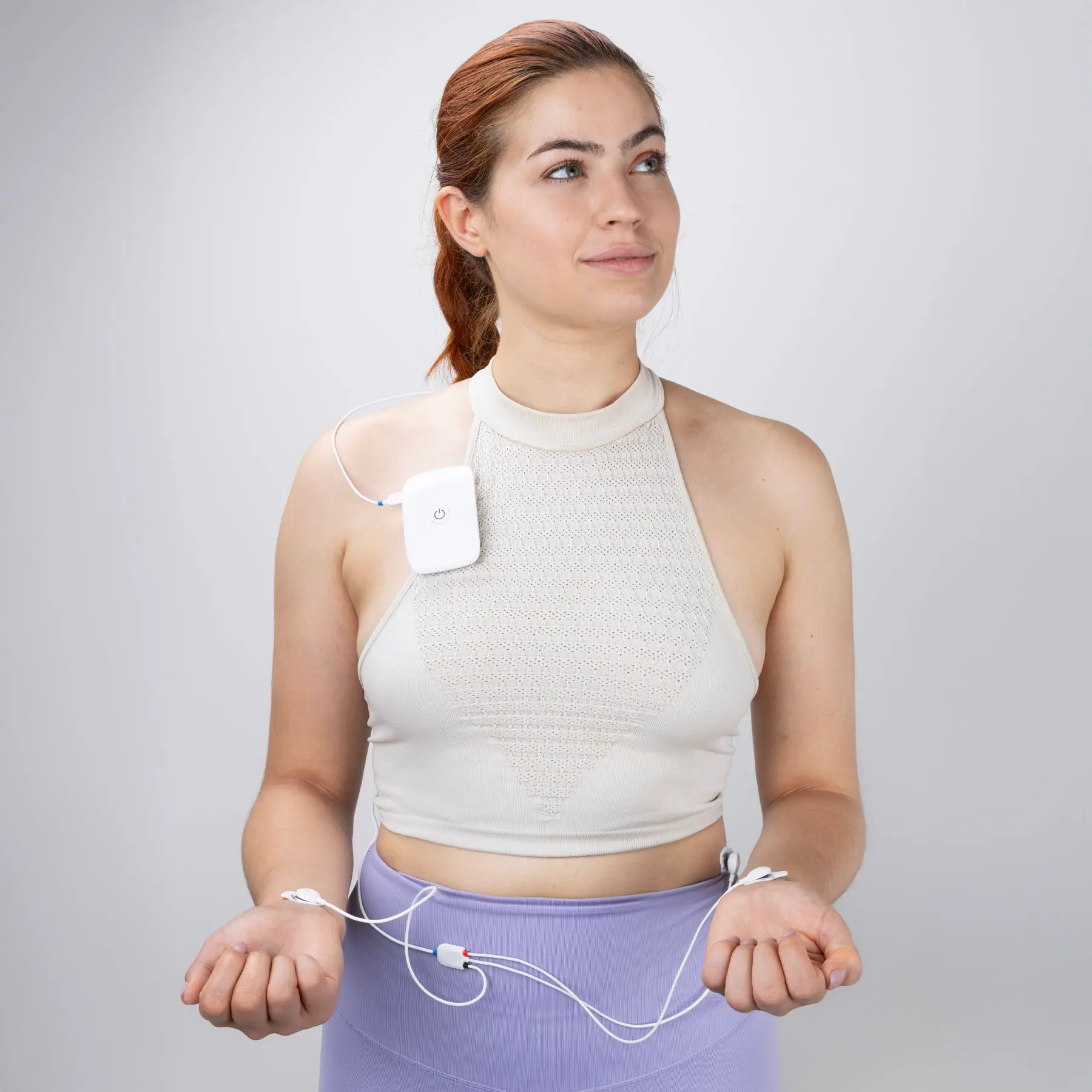
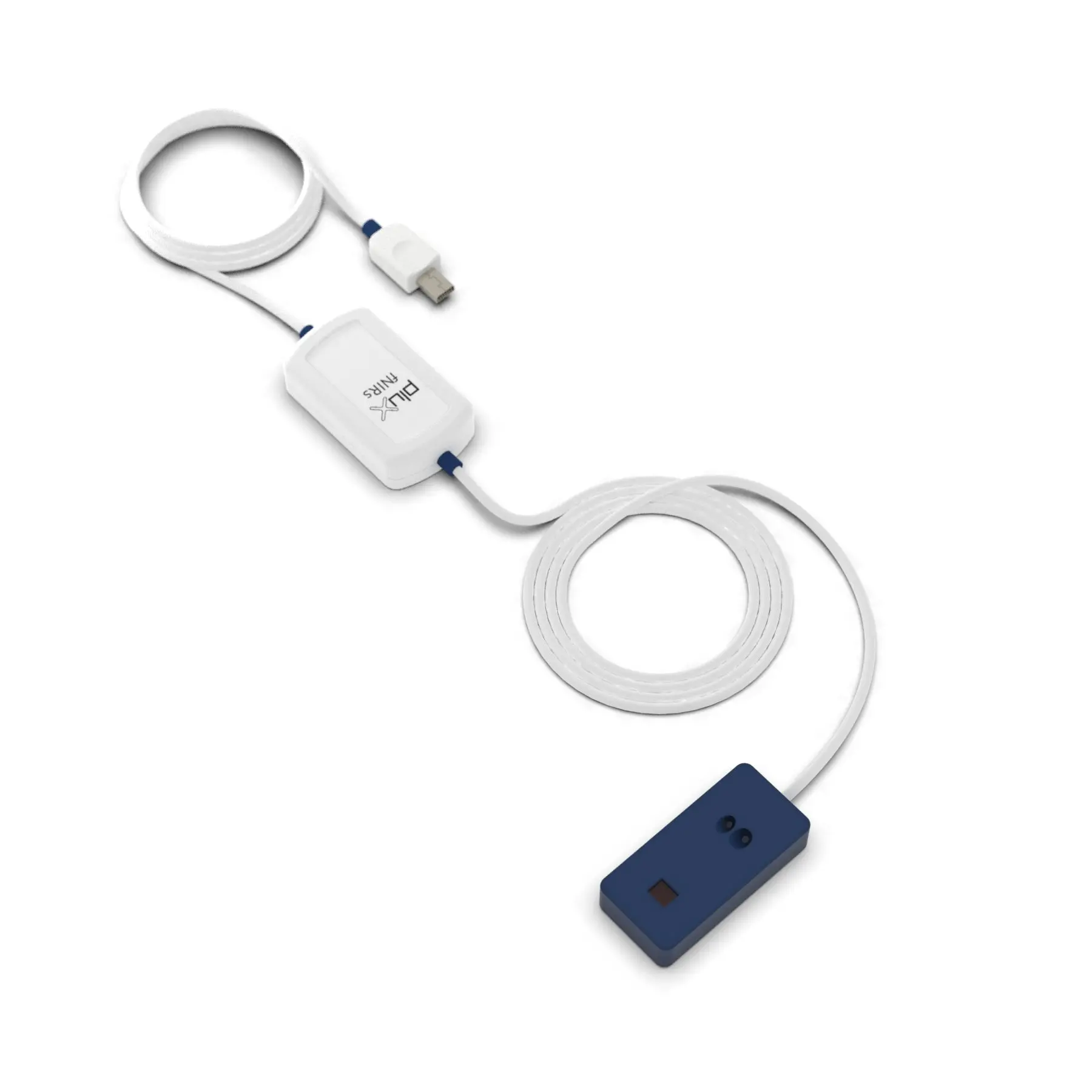
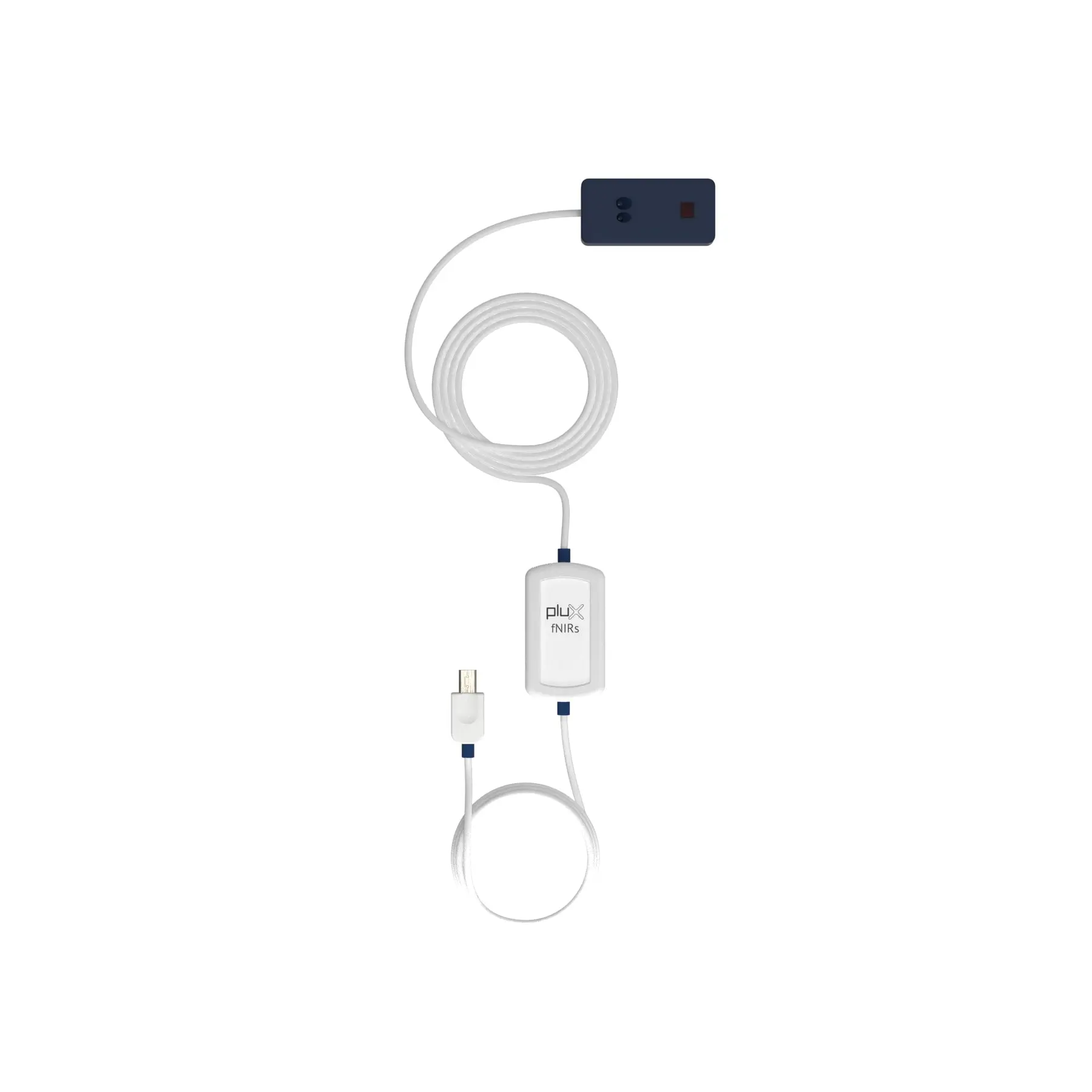
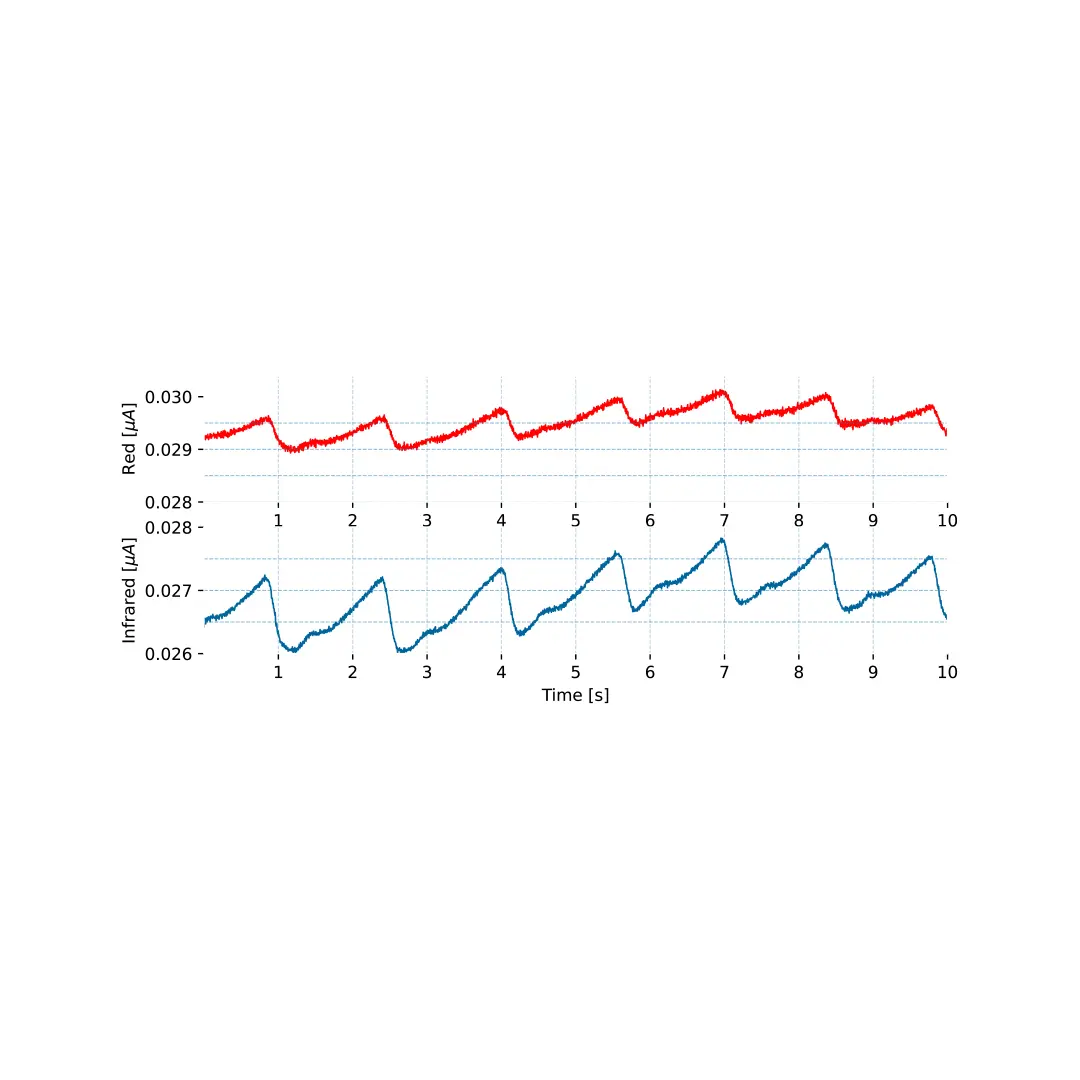
The FNIRS (Functional Near-Infrared Spectroscopy) sensor is an easy-to-use sensor which uses two emitting LEDs, one in the red region and the other in the infrared region of the spectrum, to measure the red and infrared light reflectance in the cortical tissue. It provides a non-intrusive and non-invasive method to estimate the local oxygen saturation level in the blood to derive information about the activity of the perfused tissue, for example, to measure and track the activity of a specific brain region by measuring variations in oxygen saturation levels. The sensor is primarily designed for measurements on the forehead.
The reflected light of each one of these LEDs is absorbed by a photodiode and then this current is converted into a digital value that is sent via SPI. Additionally, the acquired sensor data can be used to extract heart rate information.
This sensor has been developed in cooperation with the R&D company Charles River Analytics to provide a new miniaturized FNIRS sensor allowing acquisitions of high-quality data in brain activity-tracking applications while keeping the costs at a fraction of current systems’ costs.
Features
- Adjustable LED intensities
- Accurate signal acquisition on the forehead
- Pre-conditioned digital output
- High signal-to-noise ratio
- Versatile form-factor
- Medical-grade raw data output
Specifications
- Dual LED Design: 1 red & 1 infrared LED
- Red LED Wavelength: 660nm
- Infrared LED Wavelength: 950nm
- Detector Sensitivity: 400nm-110nm (max@920nm)
- Resolution: 24-bit
- Sampling Rate: 500Hz
- Cable Length: 100cm±0.5cm (customizable; extra costs may apply)
- Connector Type: UC-E6 (male; must be connected to a biosignalsplux acquisition unit)
- This sensor is only compatible with biosignalsplux acquisition system
Downloads
- Datasheet
- User Manual
- Sample Signal
- OpenSignals (r)evolution (Windows, macOS, Linux)
- OpenSignals Mobile (Android)
- Application Programming Interfaces (APIs) & Sample Code on GitHub
Details & Craftsmanship
Every detail has been carefully considered to bring you the perfect product.
Details & Craftsmanship
Every detail has been carefully considered to bring you the perfect product.
Details & Craftsmanship
Every detail has been carefully considered to bring you the perfect product.
Description
Description
The FNIRS (Functional Near-Infrared Spectroscopy) sensor is an easy-to-use sensor which uses two emitting LEDs, one in the red region and the other in the infrared region of the spectrum, to measure the red and infrared light reflectance in the cortical tissue. It provides a non-intrusive and non-invasive method to estimate the local oxygen saturation level in the blood to derive information about the activity of the perfused tissue, for example, to measure and track the activity of a specific brain region by measuring variations in oxygen saturation levels. The sensor is primarily designed for measurements on the forehead.
The reflected light of each one of these LEDs is absorbed by a photodiode and then this current is converted into a digital value that is sent via SPI. Additionally, the acquired sensor data can be used to extract heart rate information.
This sensor has been developed in cooperation with the R&D company Charles River Analytics to provide a new miniaturized FNIRS sensor allowing acquisitions of high-quality data in brain activity-tracking applications while keeping the costs at a fraction of current systems’ costs.
Features
- Adjustable LED intensities
- Accurate signal acquisition on the forehead
- Pre-conditioned digital output
- High signal-to-noise ratio
- Versatile form-factor
- Medical-grade raw data output
Specifications
- Dual LED Design: 1 red & 1 infrared LED
- Red LED Wavelength: 660nm
- Infrared LED Wavelength: 950nm
- Detector Sensitivity: 400nm-110nm (max@920nm)
- Resolution: 24-bit
- Sampling Rate: 500Hz
- Cable Length: 100cm±0.5cm (customizable; extra costs may apply)
- Connector Type: UC-E6 (male; must be connected to a biosignalsplux acquisition unit)
- This sensor is only compatible with biosignalsplux acquisition system
Downloads
- Datasheet
- User Manual
- Sample Signal
- OpenSignals (r)evolution (Windows, macOS, Linux)
- OpenSignals Mobile (Android)
- Application Programming Interfaces (APIs) & Sample Code on GitHub